Sound and lighting do not appear only when dancing begins. They accompany the wedding from guests' arrival through the ceremony, speeches, first dance, dinner and dance floor opening. When the technical side is planned as a whole, moments connect without awkward pauses or improvisation.
This checklist helps the couple, planner and venue gather the information the DJ, sound and lighting team needs to prepare a proposal suited to the event. The goal is not to book the most equipment, but to size each area and stage correctly.
1. Start with the event layout
List all areas to be used: ceremony, arrivals, dinner, dance floor, outdoors and support spaces. Say whether guests will move locations during the celebration and how much time there will be between stages.
This map defines where speakers can go, cable routes, whether more than one sound point is needed and where the DJ can watch the dance floor. It also prevents equipment from obstructing movement, photos or décor.
2. The ceremony: every guest needs to hear every word
During the ceremony, clarity matters more than volume. Plan for the officiant's voice, the couple's vows, readings, musicians and any tributes. Microphone types and quantities depend on who will speak and how people will be positioned.
Confirm whether musicians bring their own equipment, need to connect instruments to the mixing console and who will cue each entrance. For outdoor ceremonies, wind, distance and power availability also need to be planned.
3. organize music for each moment
Create a short, clear list of music for each entrance, signing, tribute, exit, welcome and first dance. Give files clear names and indicate whether the whole track should play or start at a specific section.
Send the material in advance and keep a backup copy. Streaming links may depend on the venue's connection, so essential tracks should be prepared for playback even without internet.
4. Keep the reception and dinner comfortable
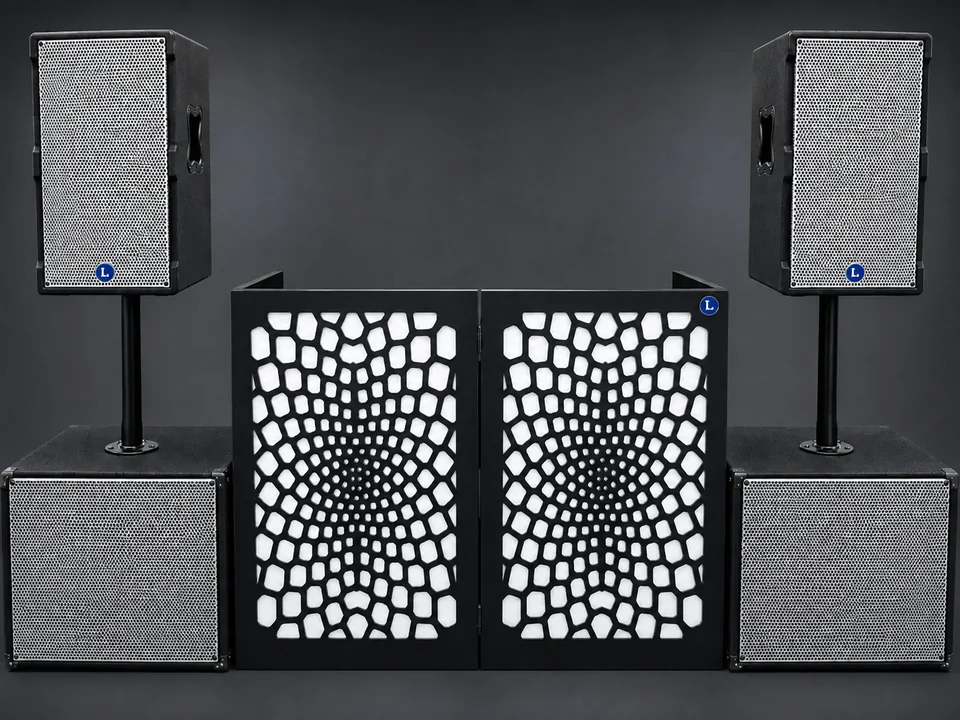
During arrivals, the music sets the mood without making conversation difficult. Speaker distribution and volume settings should consider tables, ceiling height and room shape. One point playing too loudly can be uncomfortable while other areas still lack adequate coverage.
Lighting can enhance tables, the cake, entrance and architecture with softer scenes. The idea is to preserve the elegance of this moment and save the impact of stronger movements, colors and beams for the dance floor opening.
5. Speeches, toasts and the first dance
Decide who will make announcements, hand over the microphone and where speeches will happen. If there is a video, photo montage or presentation, specify formats, duration and connection requirements for the audio system.
For the first dance, agree on the exact music starting point, couple's position, planned duration and ending cue. Lighting can change gently to highlight the moment and then make a clear transition to the dance floor.
6. The DJ and opening the dance floor
Alongside favorite songs, share must-play tracks, styles that do not suit the couple and the guest profile with the DJ. A very long, fixed list limits freedom to read the dance floor; a well-built brief preserves the couple's identity while allowing the sequence to adapt to guests' reactions.
The dance floor opening should feature a noticeable change in music and lighting. Avoid scheduling important announcements or service immediately afterward, as those first minutes help gather guests and build energy.
7. LED dance floor and effects lighting
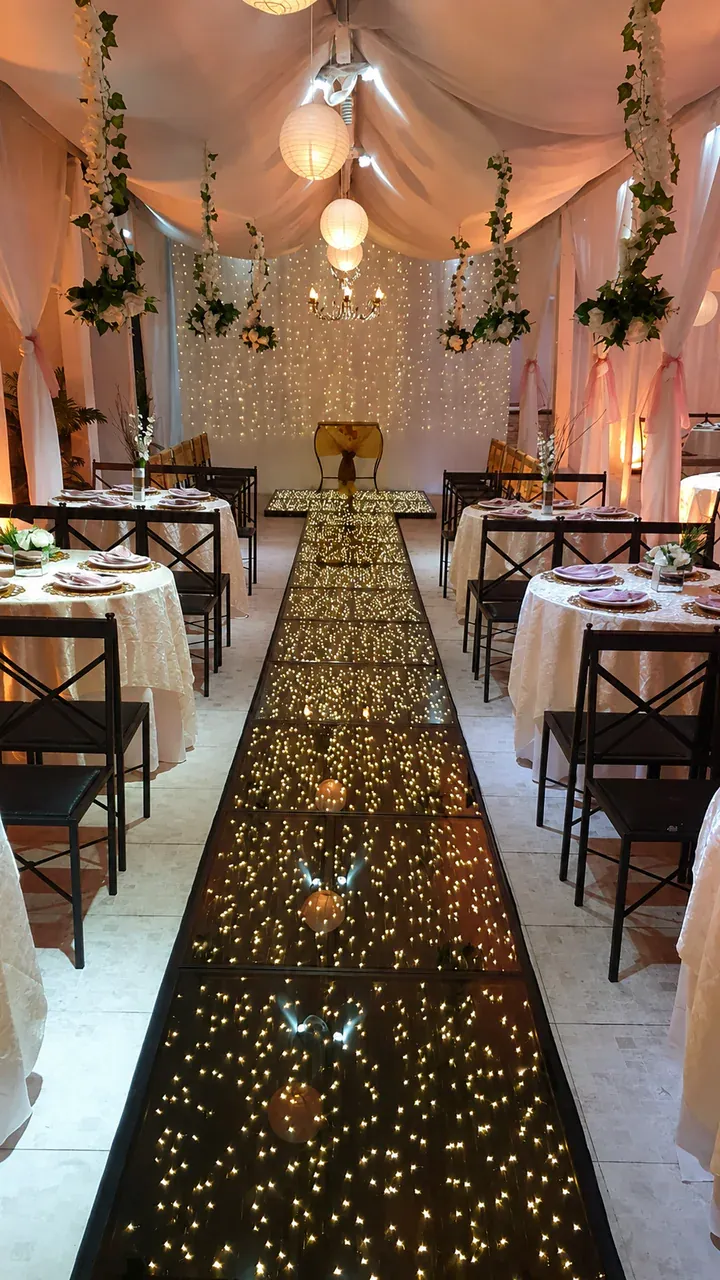
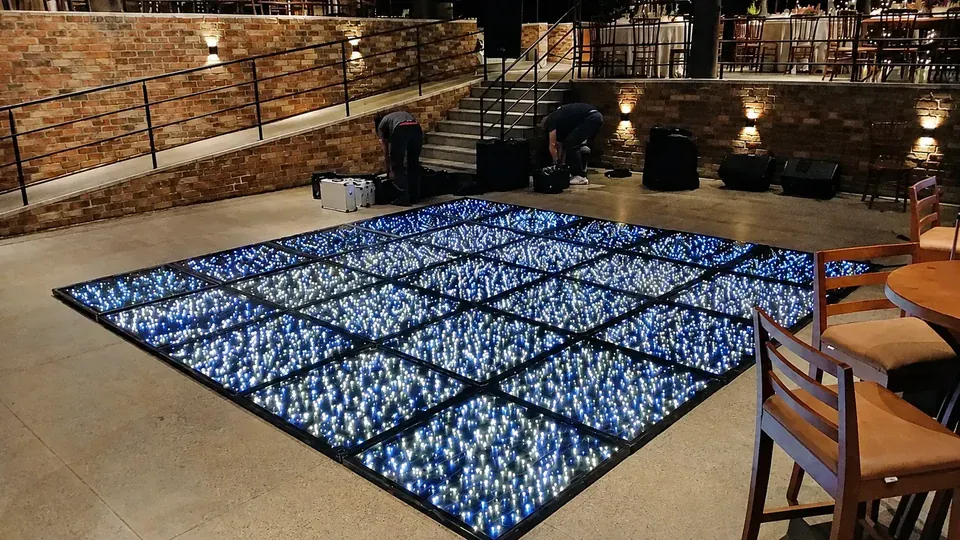
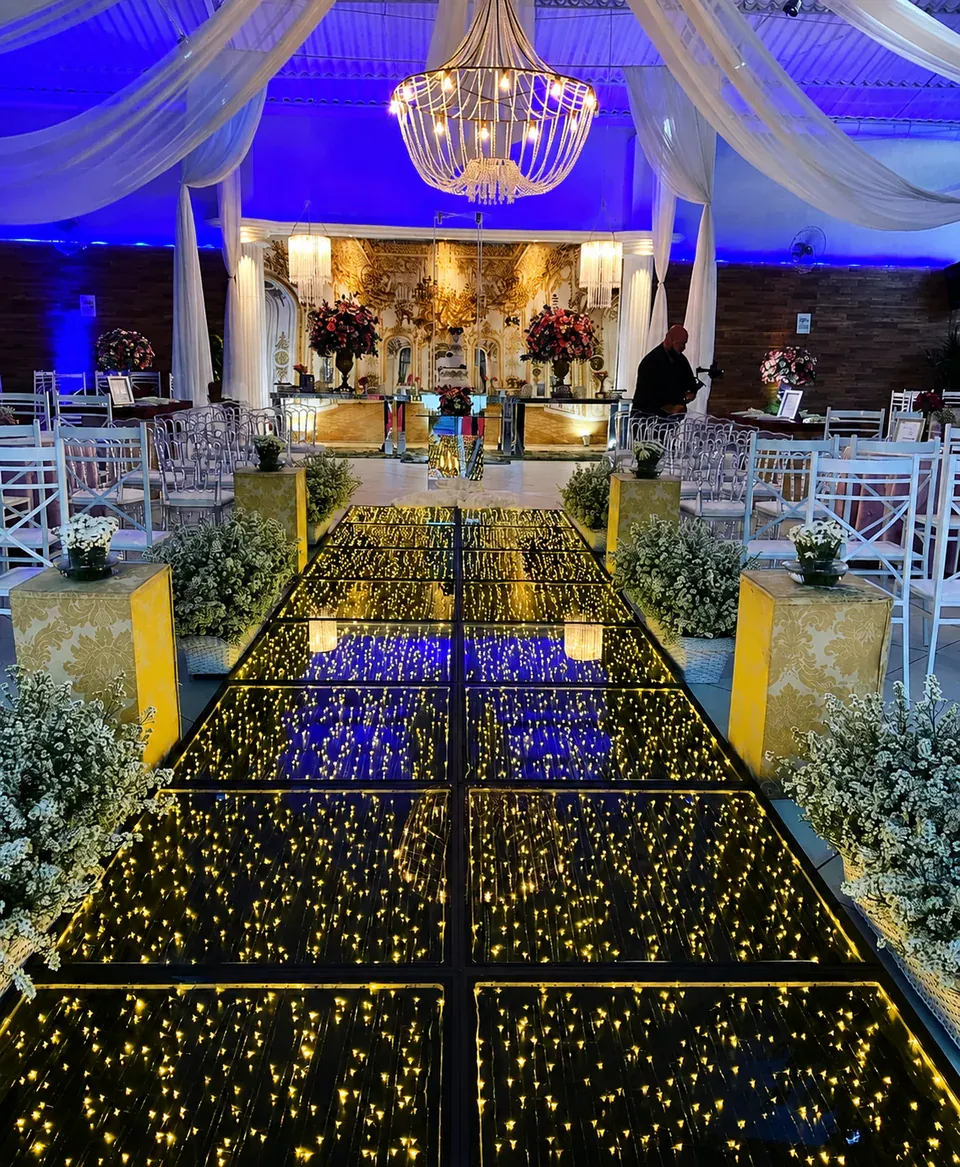
An LED dance floor can serve as a walkway, setting for the first dance and center of the party. To size it, consider available space, guest count, floor levelness and walkways.
Lasers, moving heads, mirror balls and other effects should be chosen according to the room's height, dimensions and characteristics. The design needs to respect safety, audience positions and venue guidance.
8. Setup, power and access
Confirm permitted loading, setup, testing and teardown times with the venue. Elevators, stairs, distance from parking and access restrictions directly affect working time.
Ask the venue for information about power and available points. Do not assume a nearby outlet can serve the whole setup. Cables, extensions, distribution and protection should be part of technical planning.
Checklist to send your supplier
- Date, city, address and venue name.
- Start, finish, setup and teardown times.
- Estimated guest count.
- Map of ceremony, reception and dance floor areas.
- Schedule with entrances, vows, speeches, first dance and dance floor opening.
- Essential song list and planner contacts.
- Participation of musicians, a band, officiant or other entertainment.
- Need for microphones, video playback and additional equipment.
- Desired items: DJ, sound, lighting, LED dance floor, lasers and truss.
- Venue rules for volume, power, access and safety.
Mistakes that planning prevents
Common problems include discovering on the day that the ceremony and party are far apart, receiving unidentified music files, not testing videos, starting speeches without an available microphone and delaying the dance floor opening through poor coordination between catering and the planner.
Another mistake is choosing the setup solely from photos of other events. Each room has its own dimensions, acoustics, power and rules. A suitable solution starts with the wedding's real details.
Frequently asked questions
How many microphones are needed?
It depends on the ceremony format. Consider the officiant, vows, musicians, readers and a backup option for essential moments.
Can the same sound system cover the ceremony and party?
They can be integrated, but each area needs appropriate sizing. Separate spaces may require dedicated sound points and cabling.
When should dance floor lighting be switched on?
Dynamic lighting usually builds in intensity when the dance floor opens. Before that, softer scenes enhance arrivals, décor and the first dance.
What should I send to receive a quote?
Date, city, venue, guest count, times, areas used, entertainment, schedule and desired equipment.